
System Settings
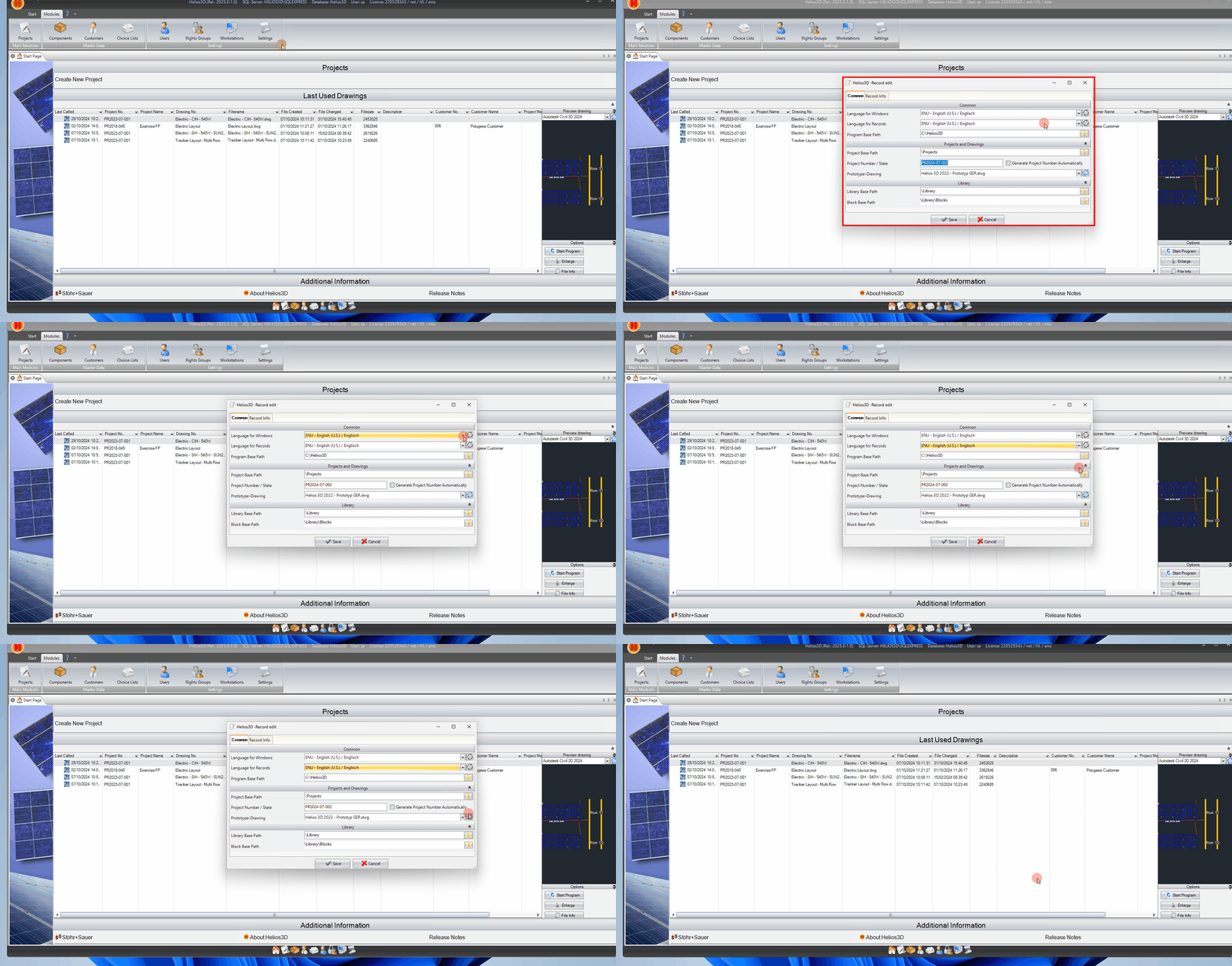
In this section, you can modify the settings for your Helios 3D installation, as shown in the following figure.
The System Settings define central default values for the current Helios 3D installation. They affect new user profiles, new projects, new drawings, project directories, library data, block data and the default prototype drawing.
These settings should usually be checked after installation, before the first productive project, and whenever Helios 3D is used in a network or multi-user environment.
Note: System Settings should normally be maintained by an administrator or by a user responsible for the Helios 3D installation. Incorrect paths or missing access rights can affect all users working with this installation.
Before you change these settings
Before changing the System Settings, make sure that all required directories are available and that the users who work with Helios 3D have the necessary access rights.
This is especially important for network installations. Project, library and block directories must be reachable from all relevant workstations and must allow write access where required.
If central paths are changed after projects have already been created, check carefully whether existing projects, drawings, libraries or block data are affected.
Language for Windows
This setting allows you to select the default language for all dialogs in the current Helios 3D installation. It serves as the default for new user profiles and acts as a fallback when no language is specified in a user’s profile. These settings need to be configured only once, but you can change them individually for each user in their profile settings.
Use this setting if new users should start with a specific default dialog language. If a user profile already contains an individual language setting, the user-specific setting may override this installation default.
If dialogs are displayed in an unexpected language, check both this setting and the language setting in the affected user profile.
Language for Records
Here, you can select the default language for all records (including descriptions and other language-dependent information) in the current Helios 3D installation. This setting will be applied to new user profiles and will serve as a fallback if not specified in a user’s profile. Like the previous setting, these configurations are required only once and can be adjusted for individual users in their profile settings.
Language for Records is not the same as the dialog language. It controls the preferred language for database records, descriptions and other language-dependent information.
If names, descriptions or database entries appear in an unexpected language, check this setting together with the user profile settings.
Program Base Path
You can change the base path of your Helios 3D installation here. The Figure displays the default path as a subdirectory of your installation path.
Usually, this path is set during installation and should only be changed if the Helios 3D installation location has changed or if this was instructed by your administrator or support.
After changing this path, verify that Helios 3D starts correctly on all affected workstations.
Project Base Path
You can modify the project base path of your Helios 3D installation in this section. The Figure shows the default path as a subdirectory of your installation path. All projects and related data will be stored in this directory, so all users must have write access to it; otherwise, they will be unable to use Helios 3D, which is particularly important for network installations.
The Project Base Path is the default storage location for Helios 3D projects and their related data. For multi-user environments, this path should point to a location that is available to all users who need to work with the same project data.
Before using a new Project Base Path, test whether a user can create, open and save a project in this directory.
Changing this path does not necessarily mean that existing projects are moved automatically. If existing projects should be relocated, this must be checked and handled separately.
Important: If users do not have write access to the Project Base Path, they may not be able to create or work with Helios 3D projects. This should be checked before productive work starts, especially in network installations.
Project Number / State
In this section, you can set a project number and state as a basis for any new project. If the „Generate Project Number Automatically“ option is activated, this project number will serve as the base for Helios to generate an available number with the same structure through iteration.
Use Project Number / State to define the default numbering and status basis for new projects. This helps to keep project identification consistent across the installation.
If your company uses a fixed project numbering scheme, make sure that the entered project number matches this scheme before new projects are created.
Generate Project Number Automatically
When this option is enabled (checked), the project number for a new project will be generated automatically based on iteration and the „Project Number“ setting above. In this case, you will not be able to change the number manually.
Enable this option if Helios 3D should automatically suggest the next available project number based on the defined Project Number structure.
Disable this option if users must enter project numbers manually, for example when project numbers are assigned by an external project management system.
If the project number cannot be edited when creating a new project, check whether this option is enabled.
Prototype-Drawing
Here, you can select a default prototype drawing that will be automatically preset each time you create a new drawing.
The selected prototype drawing is used as the default template when a new drawing is created. It can help ensure that new drawings start with the required predefined drawing settings.
If the expected prototype drawing is not suggested when creating a new drawing, check whether the correct prototype drawing is selected here and whether the referenced file is still available.
Library Base Path
You can modify the library base path of your Helios 3D installation here. The Figure shows the default path as a subdirectory of your installation path. All library elements and objects are stored in this directory, so all users need write access to it; otherwise, they will not be able to work with Helios 3D, which is essential for network installations.
The Library Base Path should point to the location where shared Helios 3D library elements and objects are stored. In a network installation, all users who work with the same libraries should use the same library location.If library elements are missing or cannot be saved, check whether this path is correct, reachable and writable for the affected user.
Block Base Path
You can modify the block base path of your Helios 3D installation here. The Figure shows the default path as a subdirectory of your installation path. All block elements are stored in this directory, so all users need write access to it; otherwise, they will not be able to work with Helios 3D, which is essential for network installations.
The Block Base Path defines where Helios 3D block elements are stored. This path should be available to all users and workstations that need to use the same block data.
If blocks are missing, cannot be inserted or are not updated as expected, check whether the Block Base Path is correct and whether the user has write access to this directory.
Important: In network installations, make sure that the Block Base Path is reachable from every workstation that uses Helios 3D. Different or unavailable block paths can lead to missing or inconsistent block data.
Typical workflow
A typical setup workflow is:
- Open the System Settings in the Helios 3D Database Application.
- Check the default language settings for dialogs and records.
- Verify the Program Base Path.
- Define or check the Project Base Path.
- Define the Project Number / State settings.
- Decide whether project numbers should be generated automatically.
- Select the default Prototype-Drawing for new drawings.
- Check the Library Base Path and Block Base Path.
- Test the configuration by creating a new project and a new drawing with a user account that represents the normal working environment.
Troubleshooting
If Helios 3D does not behave as expected after changing the System Settings, check the following points first:
- If users cannot create or open projects, check the Project Base Path and the write permissions for this directory.
- If the project number cannot be edited manually, check whether “Generate Project Number Automatically” is enabled.
- If the wrong language is displayed, check both the installation language settings and the affected user profile.
- If prototype drawings are not suggested as expected, check the selected Prototype-Drawing and verify that the referenced file is available.
- If library elements are missing, check the Library Base Path, its availability and the user permissions.
- If blocks are missing or cannot be used, check the Block Base Path, its availability and the user permissions.
Related topics
Related topics:
- Project Management
- User Management
- Workstations
- Component Management
- How can I add a prototype-drawing to Helios 3D?
- Why are Project Numbers not Managed automatically?